
- Neurofeedback • Drug-Free • Hopewell Junction, NY
Neuro/Bio & Educational Feedback Teaching the Brain to Regulate Itself Without Medication
A non-invasive, evidence-based program that trains the nervous system to improve its own attention, focus, emotional stability, and academic performance from the inside out.
- What Is It?
Training the Brain to Focus, Regulate,
and Perform On Its Own Terms
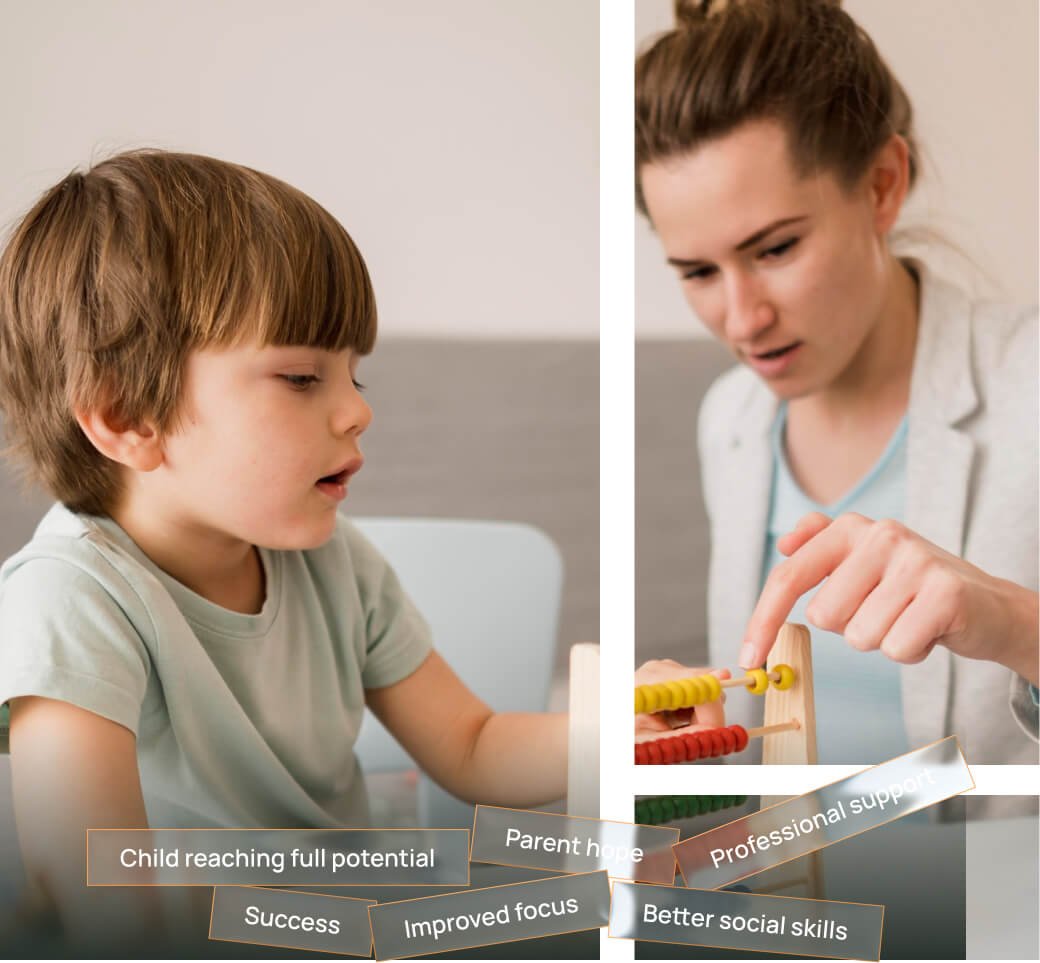
Neuro/Bio and Educational Feedback is a non-invasive brain training program designed to enhance a child’s ability to process and learn by directly stimulating and training the nervous system. Unlike behavioral interventions that teach strategies to manage attention difficulties, this program trains the brain itself to produce the brain wave patterns associated with calm, focused, and regulated attention.
The program works by giving the brain real-time feedback about its own activity and rewarding it when it moves toward healthier patterns. Over time, the brain learns to reach and sustain those patterns on its own, without external prompting or medication.
The result is a child who can tune out distractions, manage frustration before it becomes a meltdown, connect more naturally with peers, and engage academically in a way that finally reflects what they are genuinely capable of not what their nervous system has been preventing them from demonstrating.
30–40
Total individual sessions in a full program
2×
Minimum sessions per week recommended
0
Minimum sessions per week for optimal results
No diagnosis required. This program is effective for children with formal diagnoses ADHD, autism, anxiety, SPD and for children who are struggling without a clinical label, including those whose attention difficulties are tied to excessive screen time and digital overstimulation.
What Makes This Program Different

- Trains the brain to self-regulate not just follow external strategies
- Addresses attention, behavior, academics, and social skills simultaneously
- Effective for children with and without formal diagnoses
- Non-invasive and entirely drug-free no side effects
- Improvements are lasting because the brain itself has changed
- Frequently combined with other programs for deeper results
- Is This the Right Fit?
Signs Your Child's Brain May Need
Help Self-Regulating
Children whose nervous systems struggle to self-regulate often present as distracted, impulsive, emotionally volatile, or socially withdrawn not because they lack effort or intelligence, but because their brain has not yet developed the regulatory capacity to function consistently in demanding environments. If you recognize several of the following patterns, neurofeedback may be exactly what is missing.
The Neuro/Bio Educational Feedback program is also used as a performance enhancement tool for children and adults who want to sharpen focus, build mental stamina, and improve emotional resilience without a clinical diagnosis as the starting point.
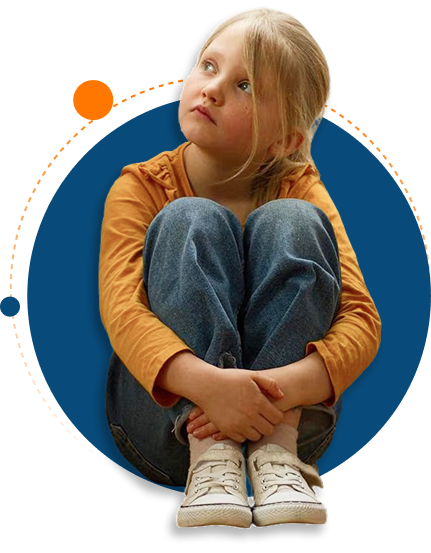
Cannot put down devices without a meltdown screen time has become a primary coping mechanism and separation triggers extreme responses.
Cannot put down devices without a meltdown screen time has become a primary coping mechanism and separation triggers extreme responses.
Cannot put down devices without a meltdown screen time has become a primary coping mechanism and separation triggers extreme responses.
Emotional dysregulation is intensifying small triggers produce disproportionate responses that are increasingly difficult to de-escalate.
Social interactions feel overwhelming your child wants to connect with peers but struggles to read cues, regulate behavior, or sustain friendships.
Hyperactivity or chronic restlessness an inability to slow down, sit still, or engage with anything that requires sustained, quiet attention.
Irritability after screen time your child is noticeably more agitated, impulsive, and emotionally reactive following technology use.
Limited progress with traditional therapy challenges with focus, behavior, or emotional regulation continue despite ongoing interventions.
- Inside the Program
Two Interconnected Training Components
The Neuro Integration Therapy™ program is built around simultaneous stimulation of three interconnected sensory systems. Unlike single-modality therapies, NIT works on all three at once because that is how the brain actually processes real-world input.
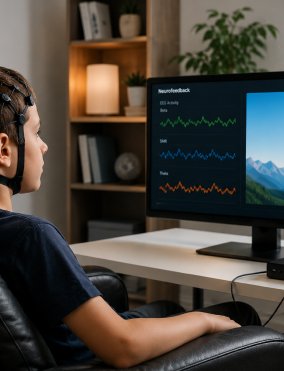
Neurofeedback Training
The brain's electrical activity is monitored in real time and fed back to the client through audio or visual signals. When the brain produces patterns associated with focused, calm attention, it receives a reward signal. Over repeated sessions, the brain learns to produce those patterns more consistently self-regulating without external prompting.

Play Attention program
The Play Attention Program is an innovative, technology-based training system designed to strengthen attention, focus, self-regulation, and executive functioning skills. Using interactive activities and real-time feedback, children learn to improve concentration, organization, task completion, and academic performance.
The combination of neurofeedback, biofeedback, and educational feedback creates a comprehensive self-regulation training program that operates on neurological, physiological, and cognitive levels simultaneously producing changes that are more durable and more generalized than any single approach alone.
- Program Goals
What the Program Is Designed to Achieve
The four core outcome areas of the Neuro/Bio and Educational Feedback program reflect the interconnected nature of neurological self-regulation because when the brain learns to focus, everything else tends to improve alongside it.
Improved sustained focus and attention
Improve Emotional Regulation
Stronger social skills and peer connection
Calmer, more stable mood baseline
Greater self-confidence and self-awareness
Reduced impulsivity and hyperactivity
Higher academic performance and output
Reduced anxiety and emotional reactivity
Improved executive functioning overall
Better tolerance of frustration and difficulty
Conditions IM Most Commonly Addresses
ADHD & Inattention
Autism Spectrum Disorder
Anxiety & Depression
Sensory Processing Disorder
Screen & Technology Overuse
Traumatic Brain Injury
Executive Functioning Deficits
Emotional Dysregulation
Developmental Delays
Sleep Disturbances
Chronic Stress (Adults)
PTSD & Trauma
Why Neurofeedback Works When Other Approaches Have Not
Interactive Metronome® is not just for children with diagnosed challenges. Student athletes, competitive performers, and adults looking to sharpen their reaction time, coordination, and mental processing also benefit significantly. The program is frequently used to enhance sports performance particularly in activities that require timing, rhythm, and spatial awareness such as basketball, gymnastics, swimming, and tennis.
- Outcomes & Results
What Families Experience After Completing the Program
Families who complete the full Neuro/Bio and Educational Feedback program describe changes that go beyond the clinic lasting shifts in how their child experiences and responds to the world around them.
Sustained Attention Without Medication
Children develop the ability to focus for meaningful periods without pharmaceutical support a change that is often noticed first by teachers, before parents even mention the program.
Emotional Meltdowns Reduce in Frequency
With improved self-regulation capacity, children reach their breaking point less often and when they do, they recover more quickly and with less intensity than before.
Calmer Mood Baseline at Home
Parents describe a general shift in household atmosphere less tension, fewer power struggles, and a child who is noticeably more present, cooperative, and emotionally available.
Academic Performance Improves
As the brain becomes better at filtering distractions and sustaining attention, schoolwork begins to reflect a child's actual intelligence not just what their attention deficit permits them to produce.
Peer Relationships Begin to Stabilize
As impulsivity decreases and social awareness improves, children find it easier to participate appropriately in group settings making and keeping friendships that previously eluded them.
Technology Relationship Becomes Healthier
Children who previously could not disengage from screens without significant behavioral fallout begin to transition away more easily because their brain no longer requires that level of stimulation to feel regulated.
- Parent stories
Real Families. Real Results.
You’re not the first family to walk in feeling hopeless. And you won’t be the last to walk out feeling seen.
We spent years trying different programs, but this was the first place where our son truly felt understood. The changes in his confidence, focus, and communication have been incredible for our whole family.
Emma & Daniel
Parents of Liam, age 7
Our daughter used to dread reading and schoolwork. Now she proudly reads bedtime stories to her little brother. The patience, warmth, and support here made all the difference.
Sophia & Michael
Parents of Ava, age 9
We spent years trying different programs, but this was the first place where our son truly felt understood. The changes in his confidence, focus, and communication have been incredible for our whole family.
Emma & Daniel
Parents of Liam, age 7
- Questions parents ask us
Honest answers to the things you're actually wondering.
Neurofeedback monitors the brain's electrical activity in real time and provides immediate feedback — typically a visual or auditory signal — when the brain produces patterns associated with focused, calm attention. The brain is naturally drawn to optimize toward the rewarded pattern through a process similar to operant conditioning. Over repeated sessions, it learns to produce those patterns consistently on its own, without the feedback signal. This is why improvements persist after the program ends — the brain itself has changed, not just the behavior.
Yes. Neurofeedback is entirely non-invasive — no electricity is sent into the brain. Sensors are placed on the scalp to read the brain's existing electrical activity, and the feedback is delivered through audio or visual signals. There are no medications involved, no needles, and no physical discomfort. The program has been used safely with children for decades and is considered a well-established clinical intervention for attention and self-regulation challenges.
No diagnosis is required. The program is effective for children with formal diagnoses like ADHD, autism spectrum disorder, anxiety, and sensory processing disorder — as well as for children who are struggling without a clinical label. Children whose attention and behavior difficulties are related to excessive technology use also respond particularly well to this program, without any formal diagnosis as a prerequisite.
The full program consists of 30 to 40 individual sessions, each lasting 45 to 60 minutes. Sessions are held at least twice per week for optimal results. The clinic is open 7 days a week — including evenings and weekends — to accommodate different family schedules.
Yes — and it frequently is. Neuro/Bio and Educational Feedback is most commonly offered as part of a larger program package that includes Neuro Integration Therapy™, Interactive Metronome®, and Cognitive and Memory Training. Our clinical team coordinates all programs to work together under one roof, ensuring each complements the others without overlap or conflict.
Many families notice early shifts within the first 8 to 12 sessions — particularly calmer behavior at home, improved ability to disengage from screens, and more manageable emotional responses. Academic and social improvements typically build progressively across the full 30 to 40 sessions. Because the brain is genuinely changing — not just learning to comply temporarily — improvements tend to continue consolidating even after the program formally ends.
Still have questions? We’d rather you ask than wonder.
- Take the first step
You don't need to have it figured out. You just need to start.
A free 30-minute conversation, no clipboards or scripts. Just us, you, and whatever you’re carrying.